Hamilton White Composting Technologies, LLC
Turning Liabilities into Assets
About Hamilton-White Composting Technologies
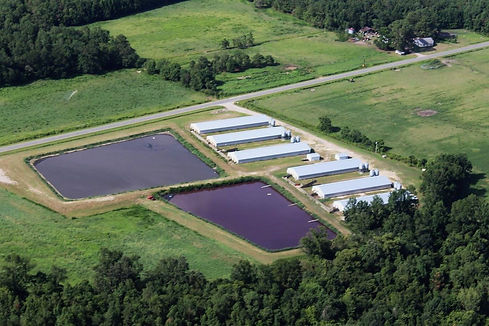
Hamilton-White Composting Technologies (HWC) is developing a new generation of agricultural infrastructure designed to replace conventional manure lagoons with controlled aerobic biological processing. Our work addresses one of the most persistent challenges in livestock agriculture: the reliable, economical, and environmentally responsible management of high-liquid manure and effluent streams.
Conventional lagoon systems depend upon long-term anaerobic storage of livestock waste. HWC takes a fundamentally different approach—processing the waste stream as part of the livestock facility's ongoing operation rather than storing it for extended periods. Through controlled aerobic, thermophilic processing, HWC is designed to stabilize organic material, reduce pathogen levels and odor potential, substantially reduce the methane-generating conditions associated with long-term anaerobic storage, and convert livestock waste into stable, humus-rich compost.
HWC is not starting from a laboratory-only concept. The technological foundation of the company was developed under U.S. Patent No. 5,405,780, issued in 1995, and subsequently incorporated into systems that were constructed, operated, and tested under real-world conditions. HWC is now combining that historically demonstrated technical foundation with modern engineering, PLC-based process controls, and updated system architecture designed for today's commercial livestock operations.
Anchored in Nebraska and designed with national and international deployment in mind, HWC is focused on building practical, scalable livestock waste-management infrastructure. Our objective is straightforward: provide livestock producers with a better way to manage waste while creating measurable operational, environmental, and economic value from a material traditionally treated primarily as a liability.


Mission
Our mission is to improve livestock waste management through practical, scalable systems designed to strengthen farm operations while reducing long-term environmental and regulatory risk.
Hamilton-White Composting Technologies is focused on developing controlled aerobic processing infrastructure as an alternative to conventional open manure lagoons. The HWC approach is designed to reduce the environmental exposure associated with long-term anaerobic storage while converting high-moisture manure and effluent into stabilized compost suitable for beneficial downstream use.
We believe environmental responsibility and agricultural productivity should reinforce one another rather than compete.
Through sound engineering, disciplined operation, modern process controls, and attention to biosecurity and operational efficiency, HWC's mission is to create lasting value for livestock producers and the communities they serve.
Our objective is to support more resilient livestock operations, reduce environmental exposure, improve waste-management performance, strengthen rural agricultural economies, and contribute to a more sustainable agricultural system for the future.

Vision
Our vision is to advance a practical, scalable alternative to lagoon-based livestock waste management through enclosed, controlled aerobic processing systems.
We aim to support stronger livestock operations, healthier rural communities, and a more resilient agricultural system by aligning environmental performance with practical operational and economic outcomes.
HWC's long-term vision is to help move livestock agriculture from prolonged waste storage toward controlled processing infrastructure that can be engineered, manufactured, and deployed at meaningful scale.